Launch offer — valid today only

ICC Fire Inspector I: Every Inspection Topic, One Drawn Page Each With Every Inspection Topic Drawn Step by Step!

Permits, construction types, occupant load, means of egress, access roads, sprinkler risers, alarm panels, hazardous materials and emergency plans: in the code books it's a wall of text. Here every topic fits on one page, with the drawing and what you need to remember. 77 drawn pages.

YES, I WANT THE DRAWN STUDY GUIDE

🔒 Secure checkout · PDF by email · 30-day guarantee

One topic per pagethe drawing shows you what to check and the text walks you through it
77 drawn pages12 parts, from the exam itself to the final review map
Up-to-date sourcesICC exam outline, IFC and IBC (2021 and 2024 editions)

This Is What the Pages You Will Study Look Like

One topic per page, the drawing that shows you how it looks on the walk-through and the boxes with what you need to know:

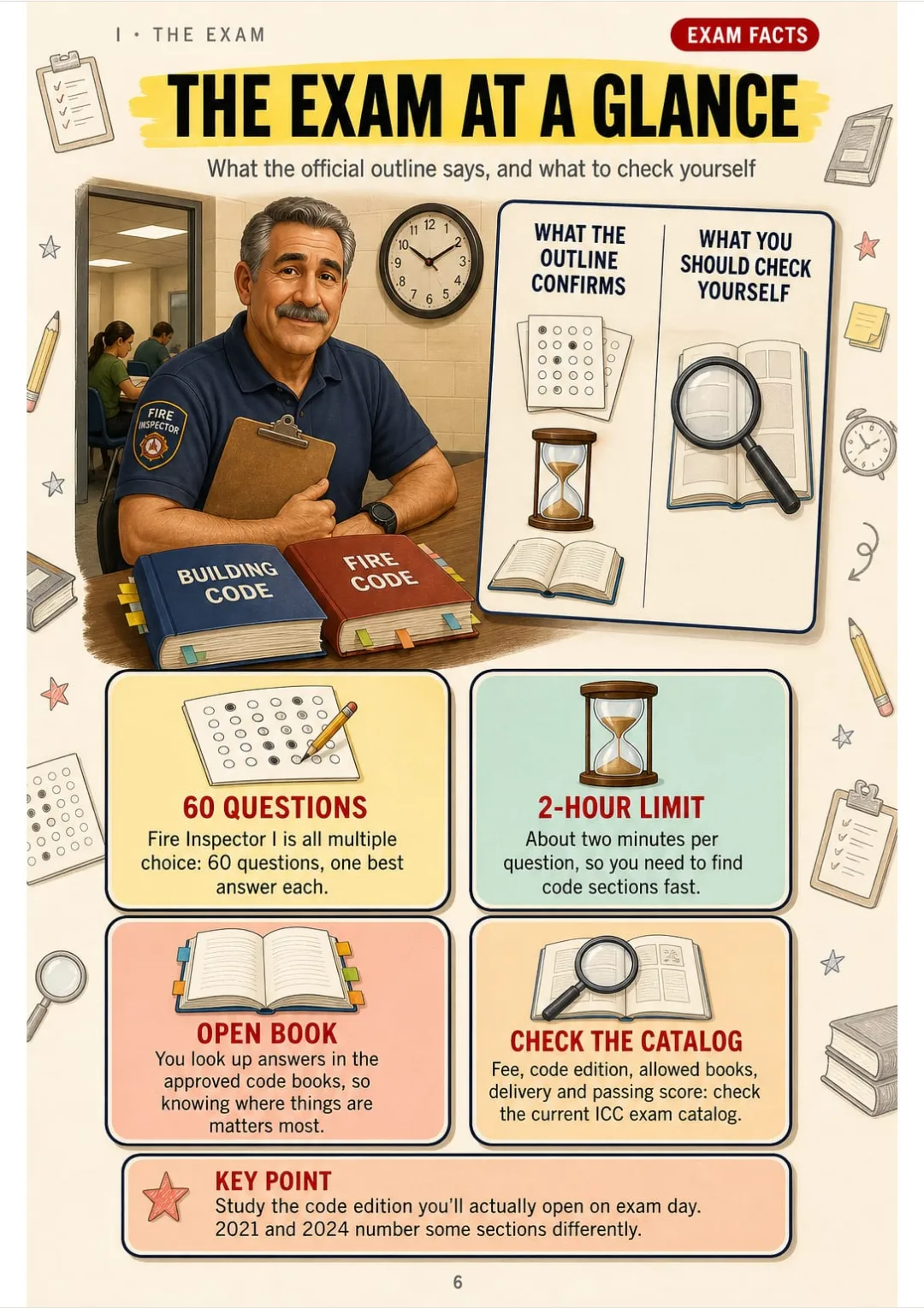
Fire Inspector I: 60 multiple-choice questions, 2 hours, open book.
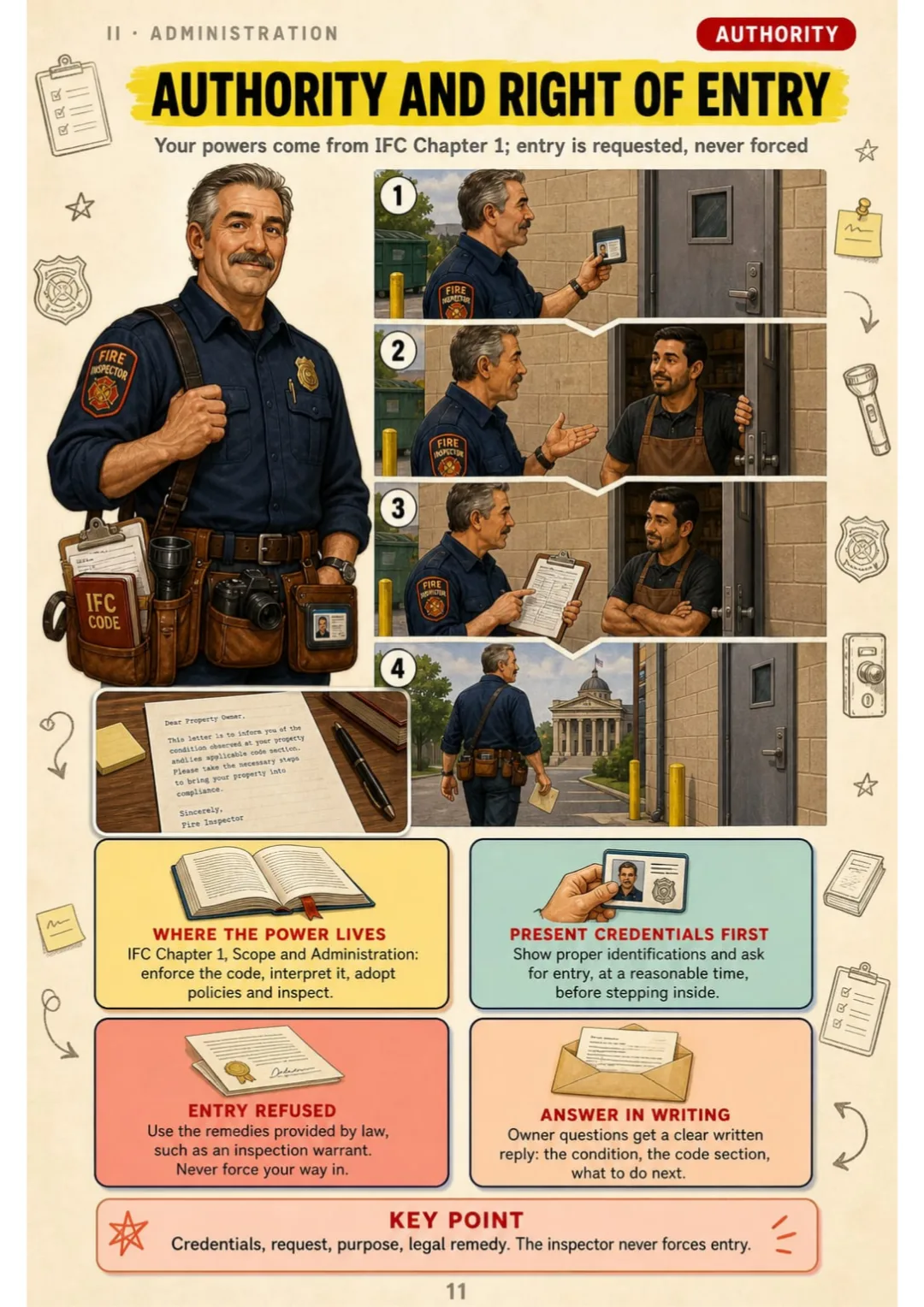
Right of entry: present credentials, request entry, explain why, use legal remedies if refused (IFC Ch. 1)
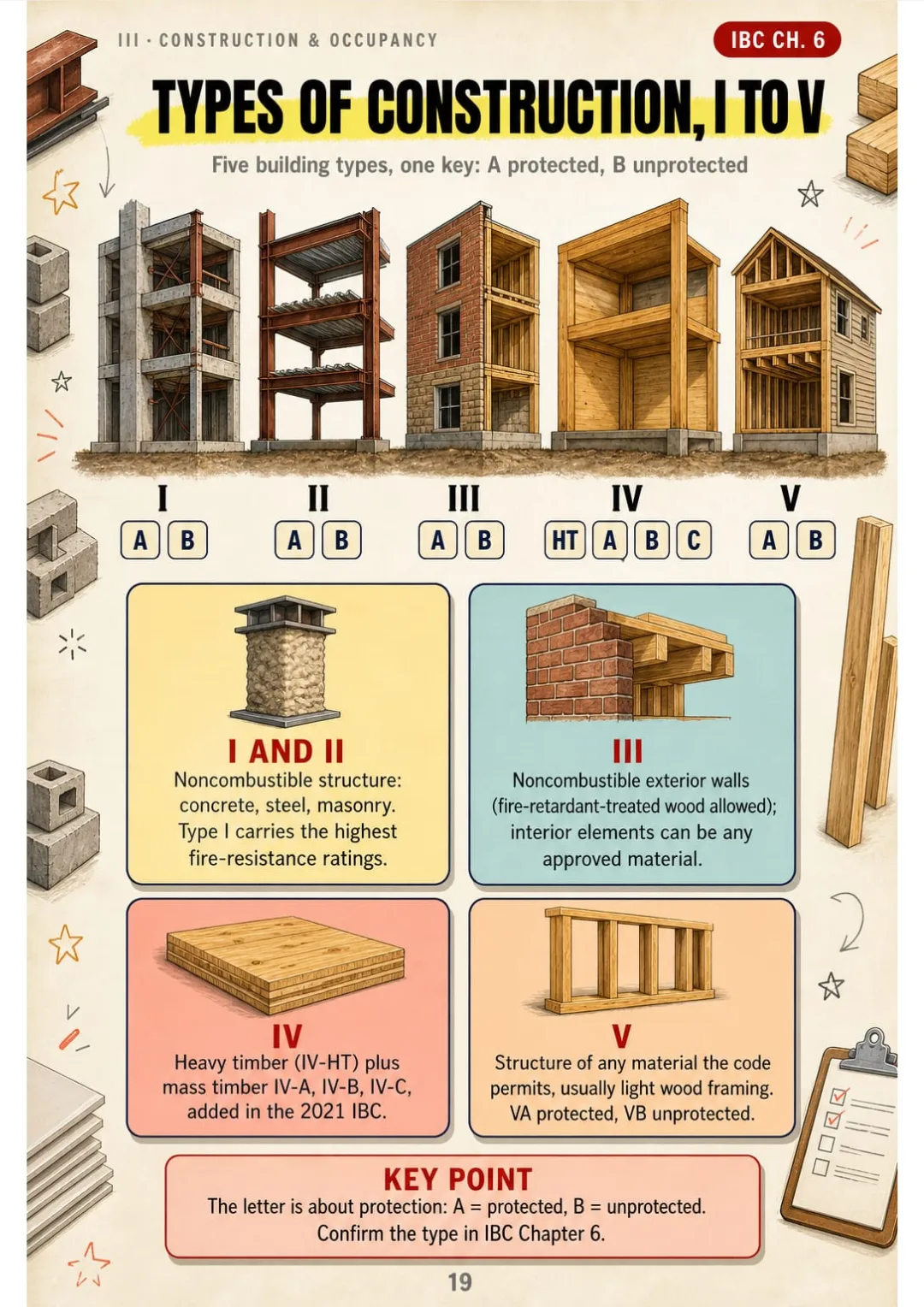
Types I to V in IBC Chapter 6: A means protected, B means unprotected.
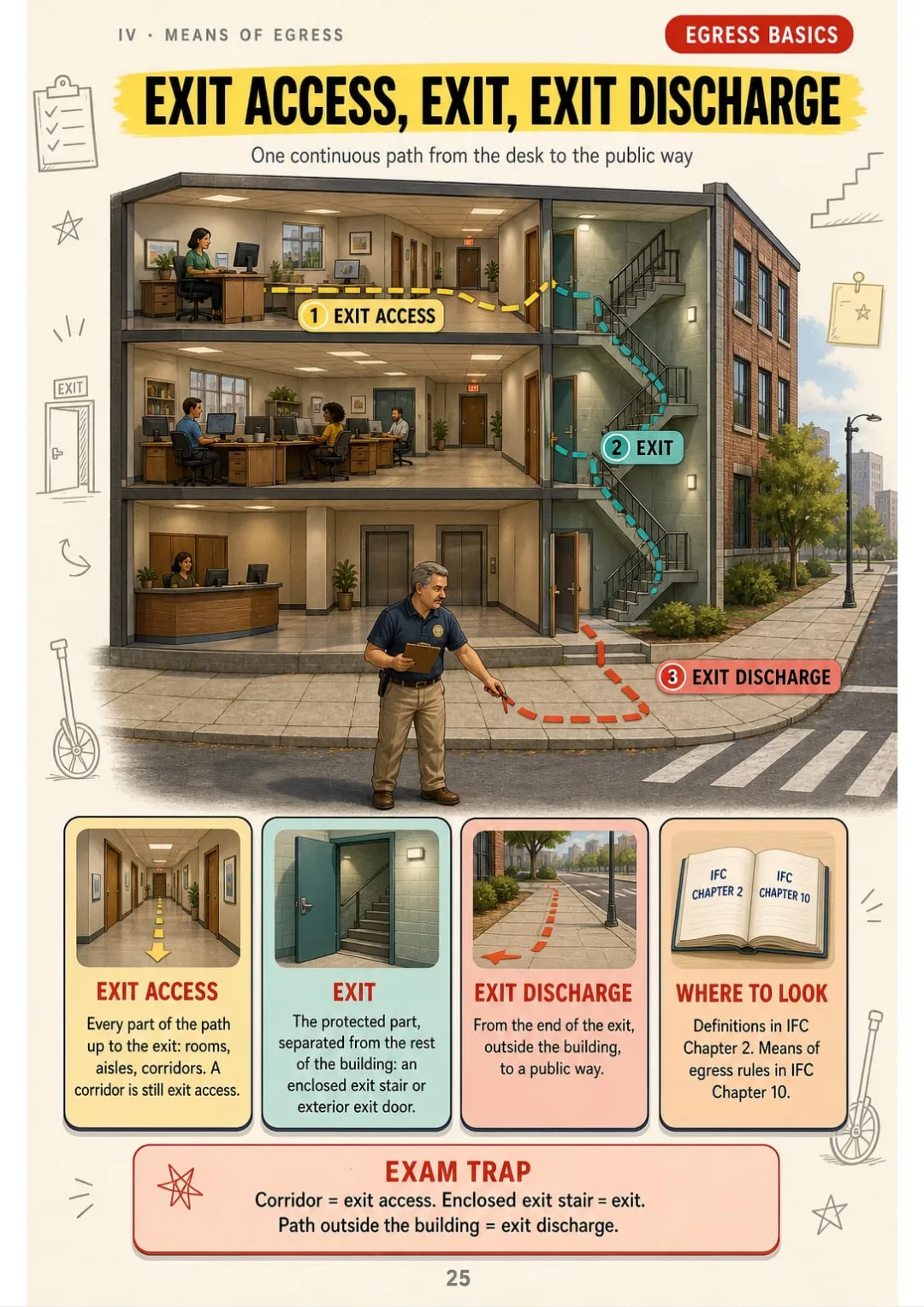
Corridor is exit access, enclosed stair is the exit, outside is exit discharge.
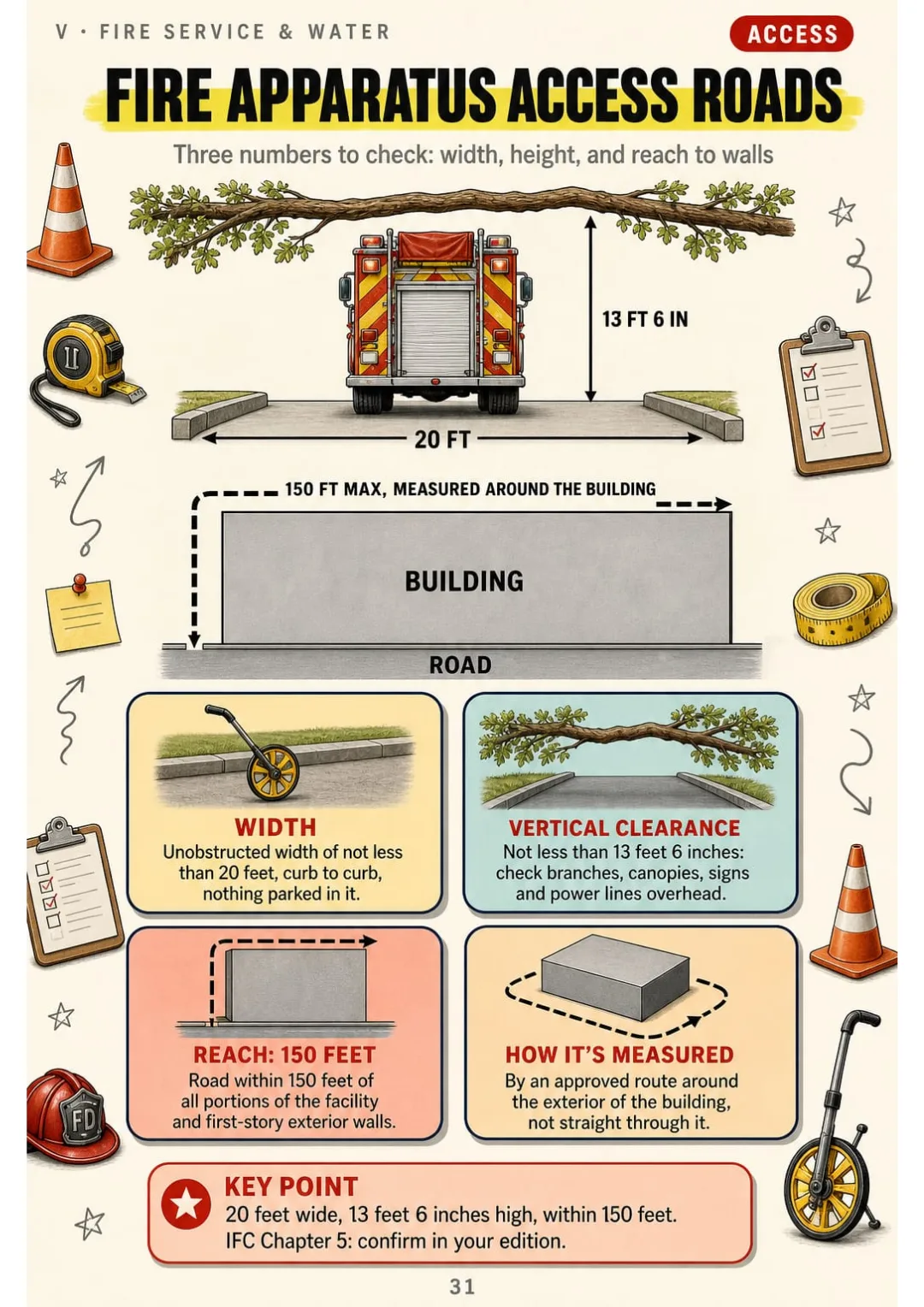
Access road: 20 ft wide, 13 ft 6 in clear (confirm in your edition) (confirm in your edition) height, within 150 ft of the walls (IFC Ch. 5, confirm in your edition).
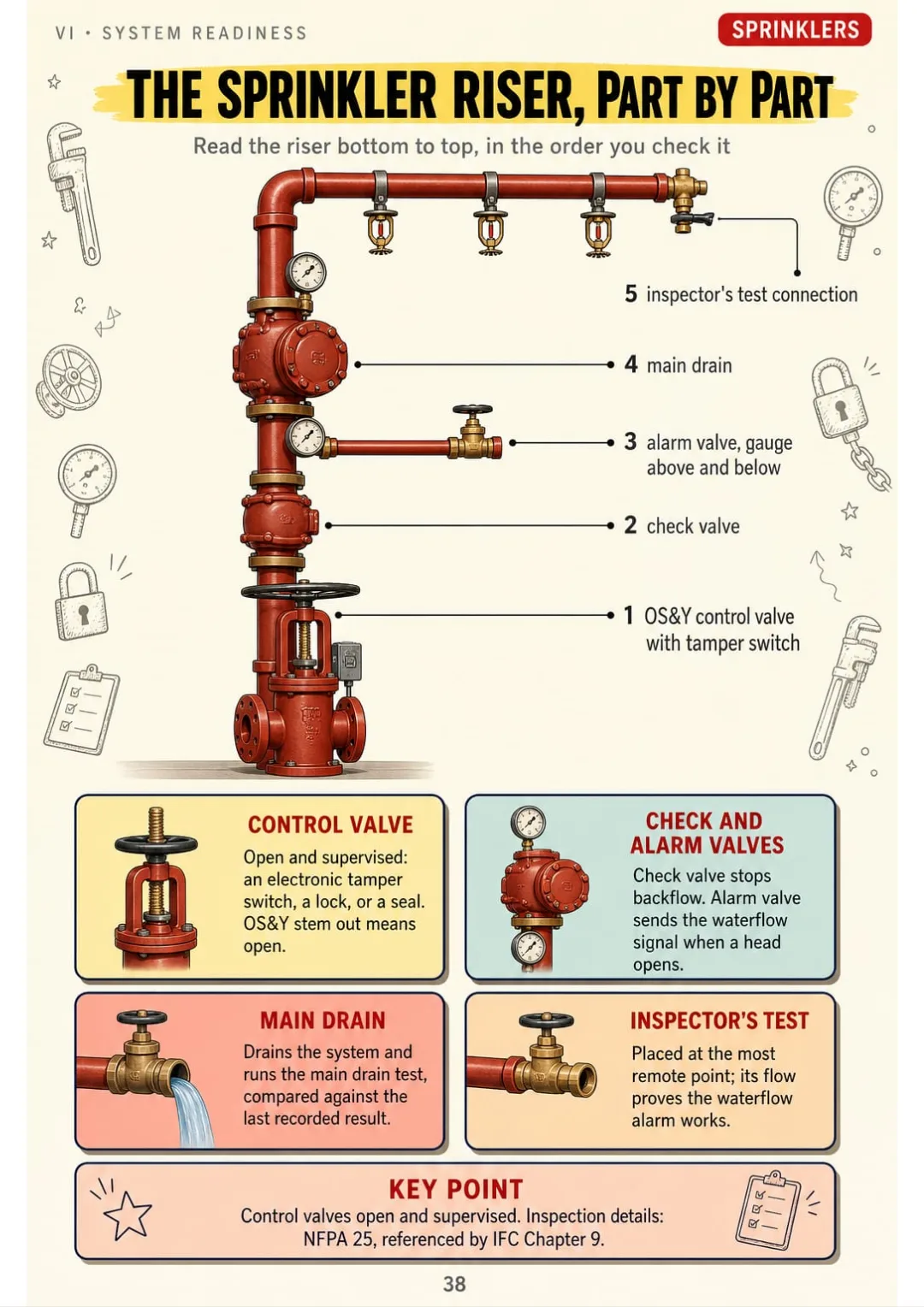
Wet-pipe riser labeled 1 to 5: control valve, check, alarm valve, main drain, inspector's test
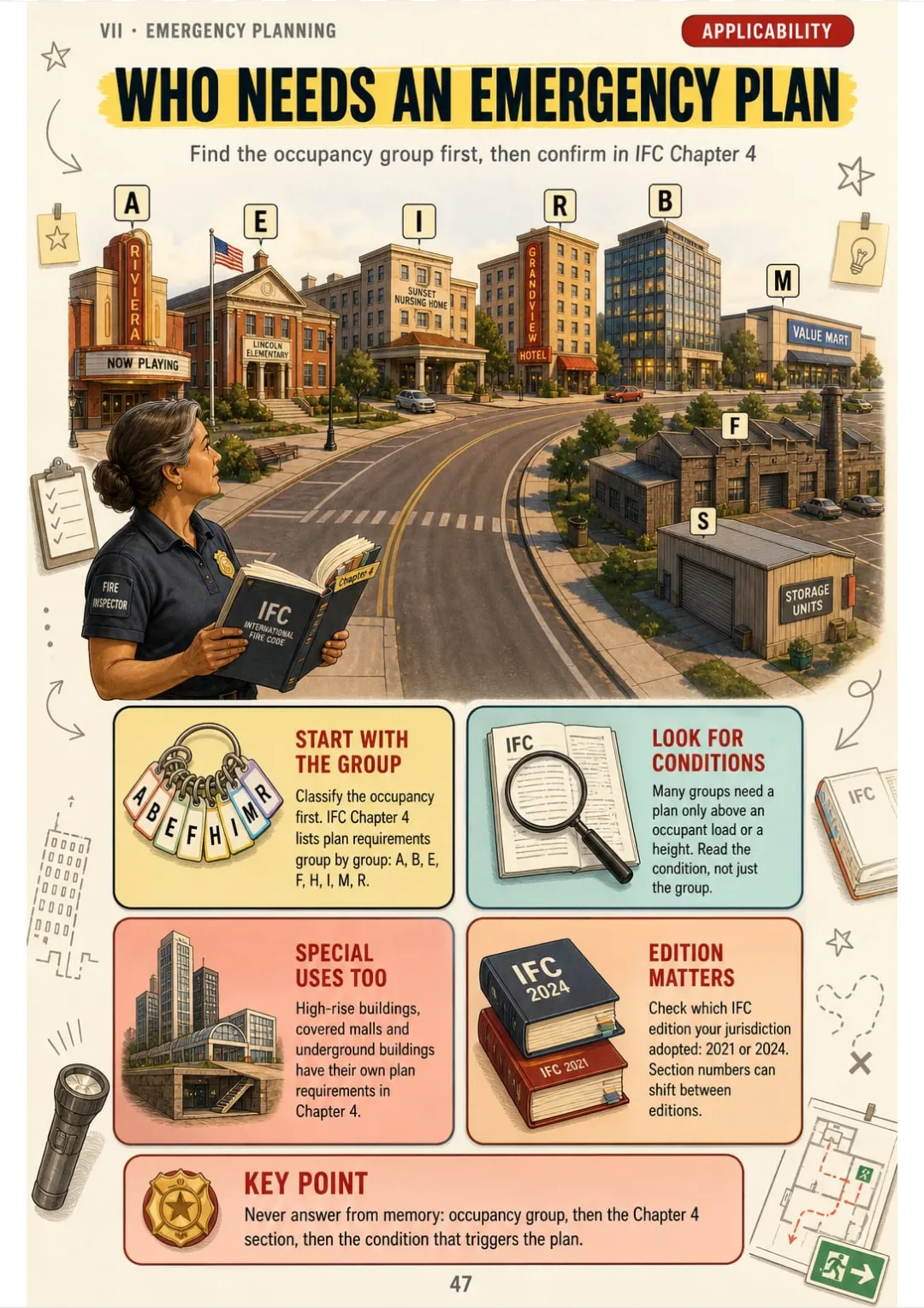
Plan requirements are listed by occupancy group in IFC Chapter 4: classify first, then look it up.
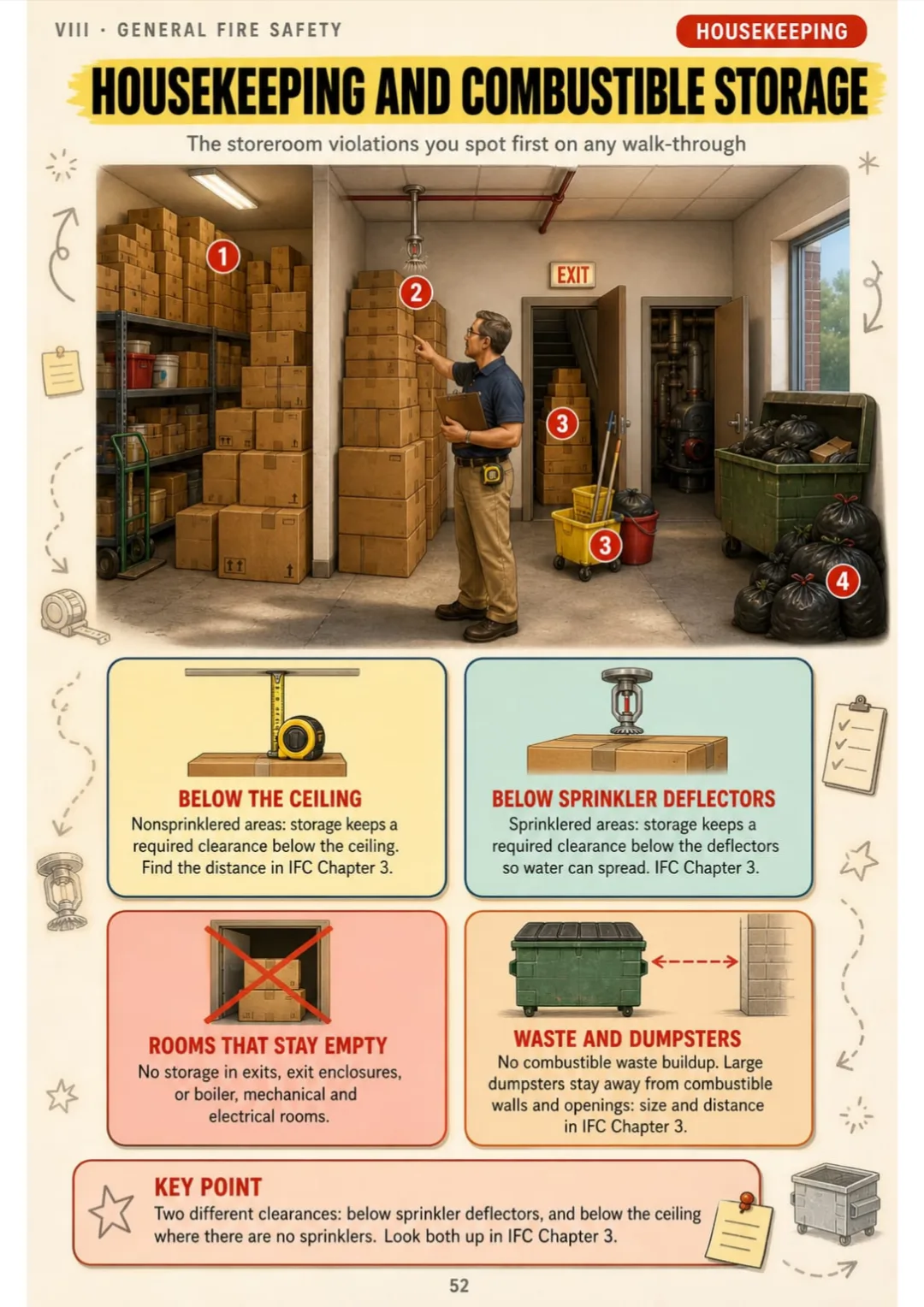
Storage: clearances below sprinklers and below the ceiling come from the code (look them up); never in exits or mechanical rooms.

Swipe to see more →

These are real pages from the book. The table of contents is the full one: 12 parts and 72 topics.

It's Not That You Can't Remember. It's That Nobody Put It in Order for You.

You've read the five construction types three times. You close the code book...

...and you no longer know what separates IIA from IIB, or Type III from Type V. It was just lines of text in a row.

Types I to V in IBC Chapter 6: A means protected, B means unprotected.

Here construction types are one page, five buildings drawn side by side from I to V: in Types I, II, III and V, A means protected and B means unprotected, plus the building code chapter where they live.

And on the pages next to it, every topic gets its own: permits, occupancy groups, occupant load, exit access and the sprinkler riser.

First you understand why it works that way. Then the order sticks on its own.

SEE THE DIFFERENCE

Stop flipping through code sections you can't picture:

THIS
  • Pages and pages of dense text
  • Code sections without a single drawing
  • On exam day, you don't know where to start
The authority of the code official to conduct inspections derives from the adopting ordinance and the administrative provisions of the code, and is exercised subject to constitutional limitations on search, such that entry to occupied premises, absent an emergency, shall be predicated upon the consent of the owner or occupant in charge, the official being obligated in all instances to present proper credentials and state the purpose of the inspection, and, upon refusal, to pursue such remedies as are provided by law, including an administrative inspection warrant.
FOR THIS
  • Every inspection topic drawn
  • One topic per page, with the rules in boxes
  • You remember it because you've seen it
Right of entry: present credentials, request entry, explain why, use legal remedies if refused (IFC Ch. 1)
CONTENTS

Take a Look at the 12 Parts and 72 Topics

The exam, inspection administration, construction and occupancies, means of egress, fire service features, fire protection systems, emergency planning, general fire safety, regulated materials, interior finishes, inspections by occupancy and the final review: 77 pages, all illustrated

IThe Fire Inspector Exam · pp. 6-10
  1. The Exam at a Glance
  2. Four Content Areas and Their Weights
  3. Open Book: Fire Code and Building Code Side by Side
  4. How the Fire Code Is Organized
  5. How to Use This Book
IIInspection Administration · pp. 11-18
  1. Authority, Right of Entry and Communication
  2. Operational and Construction Permits
  3. Issuing and Enforcing Permits
  4. When a Plan Review Is Required
  5. The Inspection Report
  6. Notices of Violation and Correction Orders
  7. Complaints, Research and Records
  8. Appeals and Testifying in Court
IIIConstruction Types and Occupancies · pp. 19-24
  1. Types of Construction from I to V
  2. Inspecting by Construction Type
  3. Occupancy Groups from A to U
  4. Mixed Uses and Accessory Spaces
  5. Occupant Load: Area Divided by the Factor
  6. Posting the Occupant Load
IVMeans of Egress in Existing Buildings · pp. 25-30
  1. Exit Access, Exit, Exit Discharge
  2. Obstructions and Locked Doors
  3. Panic and Fire Exit Hardware
  4. Corridors and Dead Ends
  5. Stairs, Handrails and Guards
  6. Exit Signs and Egress Illumination
VFire Service Features and Water Supply · pp. 31-37
  1. Fire Apparatus Access Roads
  2. Turnarounds, Gates and Fire Lanes
  3. Key Boxes and Premises Identification
  4. Fire Hydrants and Their Clearances
  5. Fire Department Connections
  6. Fire Flow: What It Means
  7. Reading a Fire Flow Test
VIFire Protection Systems: Readiness · pp. 38-46
  1. Sprinkler Systems: Parts and Valves
  2. Sprinkler Inspection: Heads, Clearance, Gauges
  3. Standpipe Classes
  4. Fire Alarm Systems: Initiating to Notification
  5. Alarm Panels: Alarm, Trouble, Supervisory
  6. Portable Fire Extinguishers: Classes and Placement
  7. Commercial Kitchen Hood Suppression
  8. Matching the Approved Plan to the Installed System
  9. Impairments and Fire Watch
VIIEmergency Planning · pp. 47-51
  1. Which Occupancies Need Emergency Plans
  2. Fire Safety and Evacuation Plans
  3. Fire Drills: Frequency and Records
  4. Lockdown and Shelter in Place
  5. Staff Training and Crowd Managers
VIIIGeneral Fire Safety and Hazardous Conditions · pp. 52-58
  1. Housekeeping and Combustible Storage
  2. Open Flames, Candles and Hot Work
  3. Electrical Hazards: Cords and Panels
  4. Heating Equipment and Clearances
  5. Keeping Rated Assemblies Intact
  6. Fire Doors and Opening Protectives
  7. Fire Safety During Construction and Demolition
IXRegulated Materials and Processes · pp. 59-66
  1. Hazardous Materials: Categories and Labels
  2. Safety Data Sheets and the Hazard Diamond
  3. Flammable and Combustible Liquids
  4. Compressed Gases and LP-Gas
  5. High-Piled Combustible Storage
  6. Spray Finishing and Combustible Dust
  7. Motor Fuel-Dispensing and Repair Garages
  8. Tents and Temporary Structures
XInterior Finishes and Fire Growth · pp. 67-69
  1. Interior Finish Classes A, B and C
  2. Decorative Materials and Furnishings
  3. Fire Growth: Fuel, Heat, Oxygen and Spread
XIInspections by Occupancy · pp. 70-74
  1. Assembly: Crowds, Seating and Aisles
  2. Educational and Day Care
  3. Institutional: Defend in Place
  4. Residential: Hotels and Apartments
  5. Mercantile, Business and Storage
XIIReview · pp. 75-77
  1. Frequent Mix-Ups, Side by Side
  2. The Exam-Day Lookup Routine
  3. Final Review Map

What If Every Topic Fit on a Single Page?

Picture this:

Instead of rereading half a page on fire apparatus access roads without being able to see one...

...you open the page and find the road drawn from above, with its width, its clear height, the 150-foot reach and the chapter to open.

Access road: 20 ft wide, 13 ft 6 in clear (confirm in your edition) (confirm in your edition) height, within 150 ft of the walls (IFC Ch. 5, confirm in your edition).

And permits, occupant load, sprinkler risers, alarm panels and the hazard diamond turn into drawings and tables you read at a glance.

You stop rereading and start understanding.

That's exactly what Fire Inspector I, Illustrated does. It's not “just another manual.” It's 12 parts and 72 illustrated topics, and at the end the frequent mix-ups side by side, an exam-day lookup routine and a final review map.

Because what your brain sees organized, it remembers.

Here Is What You Get with Fire Inspector I, Illustrated:

Ipp. 6-10

The Fire Inspector Exam

The exam at a glance, the four content areas and their weights, the fire code and building code side by side, how the fire code is organized and how to use this book.

IIpp. 11-18

Inspection Administration

Authority and right of entry, operational and construction permits, when a plan review is required, the inspection report, notices of violation, complaints and records, appeals and court.

IIIpp. 19-24

Construction Types and Occupancies

Tell Type IIA from IIB at a glance: construction types I to V drawn side by side, inspecting by type, occupancy groups A to U, mixed uses, and occupant load as area divided by the load factor, with how it's posted.

IVpp. 25-30

Means of Egress in Existing Buildings

Walk the exit path the way the code does: exit access, exit and exit discharge, obstructions and locked doors, panic hardware, corridors and dead ends, stairs and guards, exit signs and egress lighting.

Vpp. 31-37

Fire Service Features and Water Supply

Access roads, turnarounds, gates and fire lanes, key boxes and addresses, hydrants and their clearances, fire department connections, fire flow and how to read a flow test.

VIpp. 38-46

Fire Protection Systems: Readiness

Name every part of a riser and know what to check: sprinkler valves, heads and gauges, standpipe classes, alarm panels, extinguishers, kitchen hood suppression, approved plan vs. installed system, impairments and fire watch.

VIIpp. 47-51

Emergency Planning

Which occupancies need a plan, fire safety and evacuation plans, drills and their records, lockdown and shelter in place, staff training and crowd managers.

VIIIpp. 52-58

General Fire Safety and Hazardous Conditions

Housekeeping and combustible storage, open flames and hot work, cords and panels, heating clearances, rated assemblies, fire doors and fire safety during construction.

IXpp. 59-66

Regulated Materials and Processes

Hazmat categories and labels, safety data sheets and the hazard diamond, flammable liquids, compressed gases and LP-gas, high-piled storage, spray finishing and dust, fuel dispensing and tents.

Xpp. 67-69

Interior Finishes and Fire Growth

Interior finish classes A, B and C, decorative materials and furnishings, and how fire grows and spreads.

XIpp. 70-74

Inspections by Occupancy

Assembly, educational and day care, institutional defend in place, hotels and apartments, and mercantile, business and storage.

XIIpp. 75-77

Review

The frequent mix-ups side by side, the exam-day lookup routine and the final review map.

At the end of the book: Frequent mix-ups side by side, an exam-day lookup routine and a final review map.
And That Is Not All: 2 More Books, Free

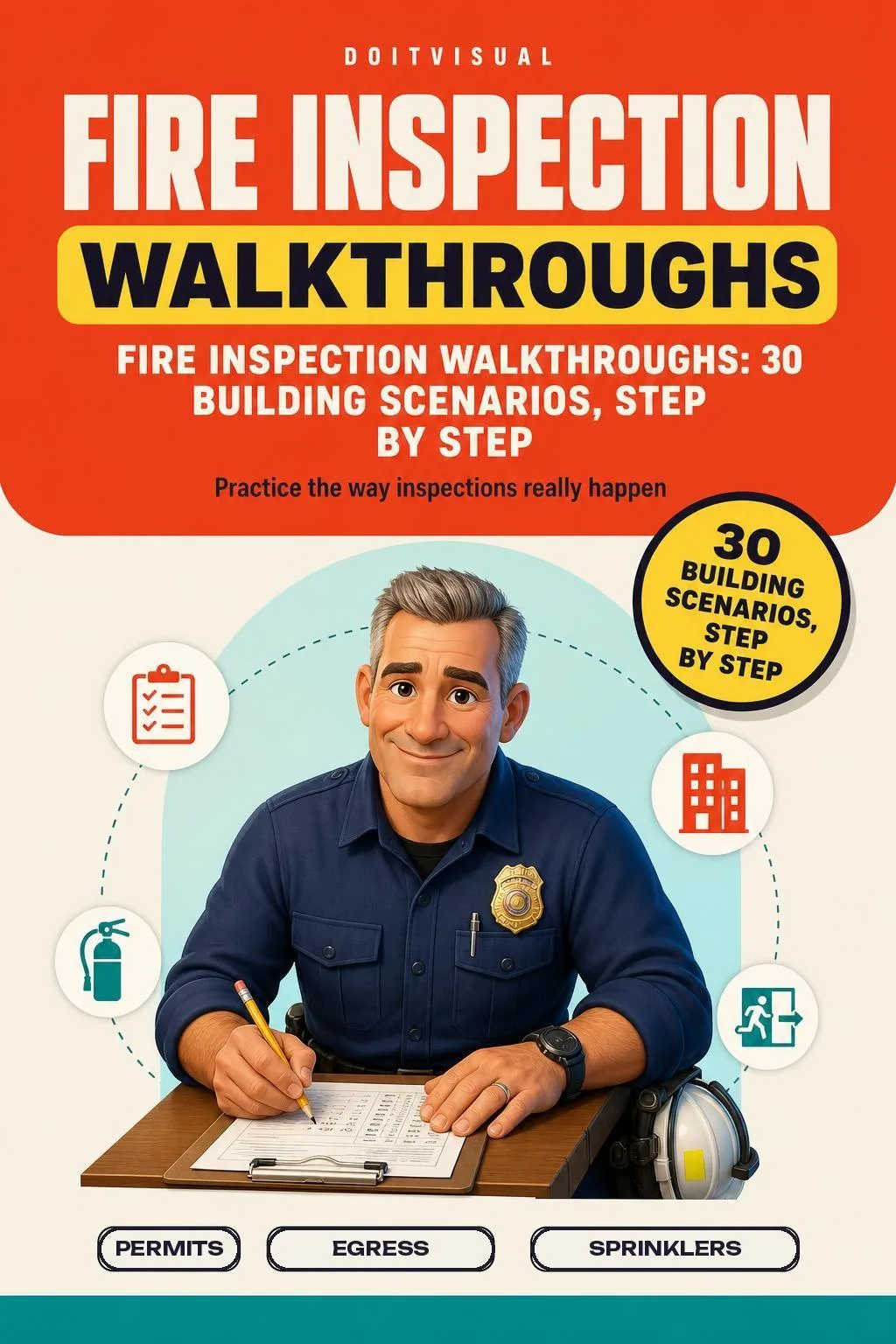
Fire Inspection Walkthroughs: 30 Building Scenarios, Step by Step

BONUS 1: «Fire Inspection Walkthroughs: 30 Building Scenarios, Step by Step»

Value on its own: US$ 17.90

Practice the way inspections really happen: 30 original walk-throughs across occupancies, each with what to check, the frequent violation and the code chapter to look in.

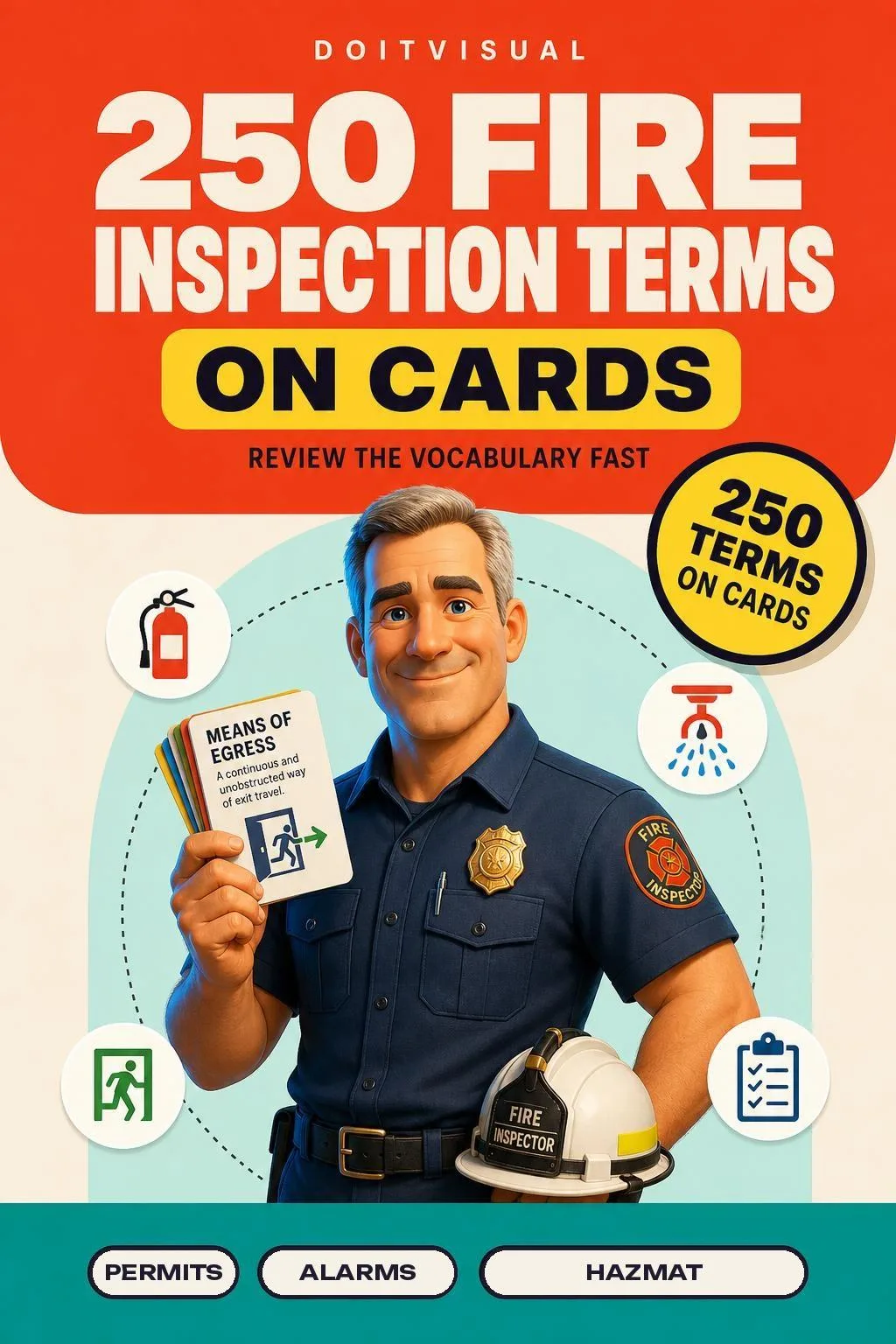
250 Fire Inspection Terms on Cards

BONUS 2: «250 Fire Inspection Terms on Cards»

Value on its own: US$ 14.90

Review the vocabulary fast: 250 real terms, each on a numbered card with a one-line definition, 10 cards per page, from permits and construction types to sprinklers, alarms and hazardous materials.

Fire Inspector I, Illustrated + 2 Free Books

  • Fire Inspector I, Illustrated: 77 drawn pagesUS$ 63
  • BONUS 1: Fire Inspection Walkthroughs: 30 Building Scenarios, Step by StepUS$ 17.90
  • BONUS 2: 250 Fire Inspection Terms on CardsUS$ 14.90
  • High-resolution PDF to printIncluded
Total value US$ 95.80
YOUR PRICE:
US$ 27
You save US$ 68.80
YES, I WANT FIRE INSPECTOR I, ILLUSTRATED FOR US$ 27

📄 This is a digital PDF book sent to your email: nothing is printed or shipped.

Secure purchaseEncrypted payment30-day guarantee

PDF by email: Fire Inspector I, Illustrated reaches your inbox as a PDF, and the two free books come by email too. One-time payment, no installments or hidden costs.

Is This Book for You?

You're moving into fire prevention

You're moving into fire prevention

Years on the line taught you fire. This gives you the building side, one drawn page per topic, to study between shifts.

Your exam date is close

Your exam date is close

A full review in the same order every time, with the code chapter to open for each topic. If it's your retake, you go straight to the areas that cost you time, and the open-book minutes go to answering, not searching.

You already do inspections

You already do inspections

A quick visual refresher of what you check every week: access roads, risers, egress, storage and emergency plans.

To Sum Up: Here Is What You Get

US$ 95.80US$ 27
YES, I WANT FIRE INSPECTOR I, ILLUSTRATED FOR US$ 27

📄 This is a digital PDF book sent to your email: nothing is printed or shipped.

30DAYS
GUARANTEE

30-Day Guarantee

30-day guarantee: tell us what didn't work and we'll refund 100%.

You have 30 days to try Fire Inspector I, Illustrated and the two bonus books. If it doesn't help you study, tell us what didn't work and we'll refund 100% of what you paid. One-time payment, no subscriptions, no surprises.

Frequently Asked Questions

How do I get the material?

You get an email, at the address you enter at checkout, with Fire Inspector I, Illustrated as a high-resolution PDF to read on your phone or print. The two bonus books, Fire Inspection Walkthroughs and 250 Fire Inspection Terms on Cards, also come by email.

Is it a monthly or a one-time payment?

A one-time payment of US$ 27, and it includes the two bonus books. No installments, no subscription. The extras offered at checkout are optional.

Who is it for?

It's built on the ICC Fire Inspector I exam (open book). It's for firefighters, fire marshal office staff and building officials preparing the exam, including retakes. If your state certifies Fire Inspector I through a different standard, many inspection topics overlap, but the exam format and references are different: check the table of contents against your outline first. If you already inspect, it works as a fast visual review.

What sources is it based on?

On the ICC Fire Inspector I content outline and on the International Fire Code and International Building Code, 2021 and 2024 editions, cited by chapter number and name. No code text is reproduced. Your ICC candidate bulletin lists the code edition your exam uses: check it before you take the exam, and bring the code books it allows.

Is this official material?

No. It's an independent study guide, not affiliated with or endorsed by the ICC or the NFPA. It doesn't give a certificate or continuing education credits: the Fire Inspector I certification comes only from passing the ICC exam.

Does it replace the code books or a course?

No. You still need the code books allowed for your exam: this book shows you where each topic lives so you find it faster. It doesn't replace your department's training.

Are the practice questions the real exam questions?

No. The 30 walk-through scenarios in the bonus book are original, written for this book. The 200 practice questions are an optional extra at checkout, also original. None of them are official exam questions; they're there to train you.

Can I print it?

Yes. It's a high-resolution PDF: print the whole book or only the pages you want to keep at hand.

What if I don't like it?

You have a 30-day guarantee: tell us what didn't work and we'll refund 100%.

One Last Thing Before You Decide...

You don't have to reread the same page hoping it sticks this time.

You don't have to memorize code sections you can't picture.

And you definitely don't have to walk into the exam not knowing where to start.

One last thing before you decide: you get 77 drawn pages, each topic with the code chapter to open, plus two bonus books, as a PDF by email. If it doesn't help you study, tell us what didn't work and we'll refund 100%.

One-time payment: US$ 27 · Guarantee: 30 days · PDF by email

YES, I WANT FIRE INSPECTOR I, ILLUSTRATED FOR US$ 27

📄 This is a digital PDF book sent to your email: nothing is printed or shipped.